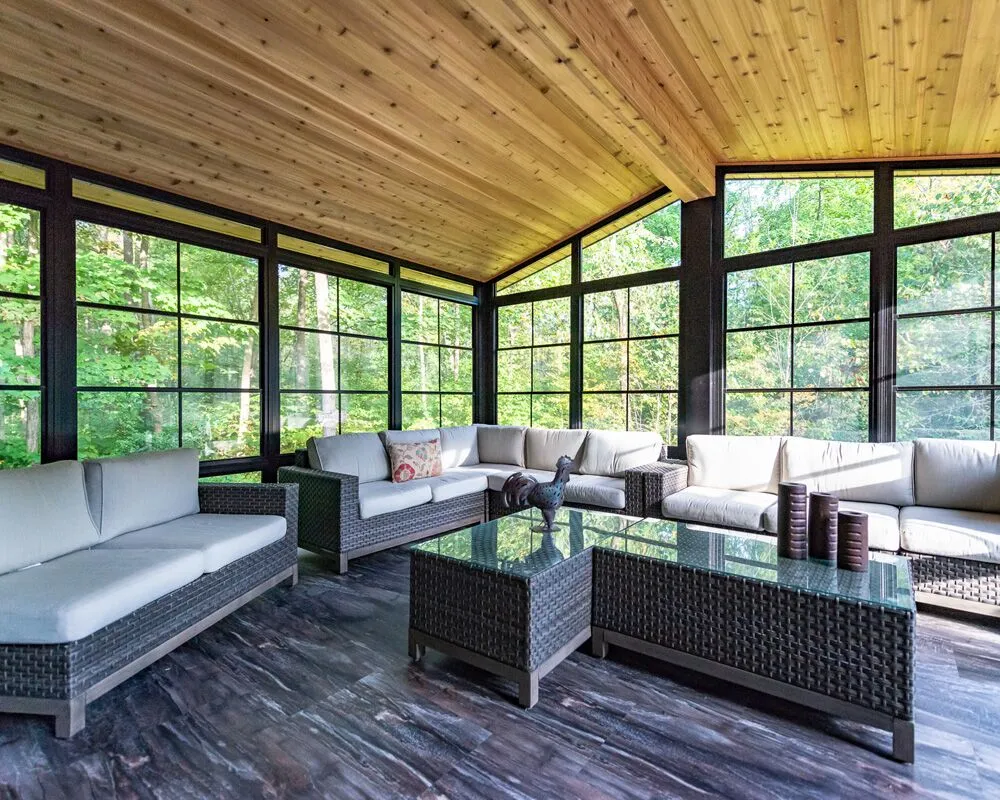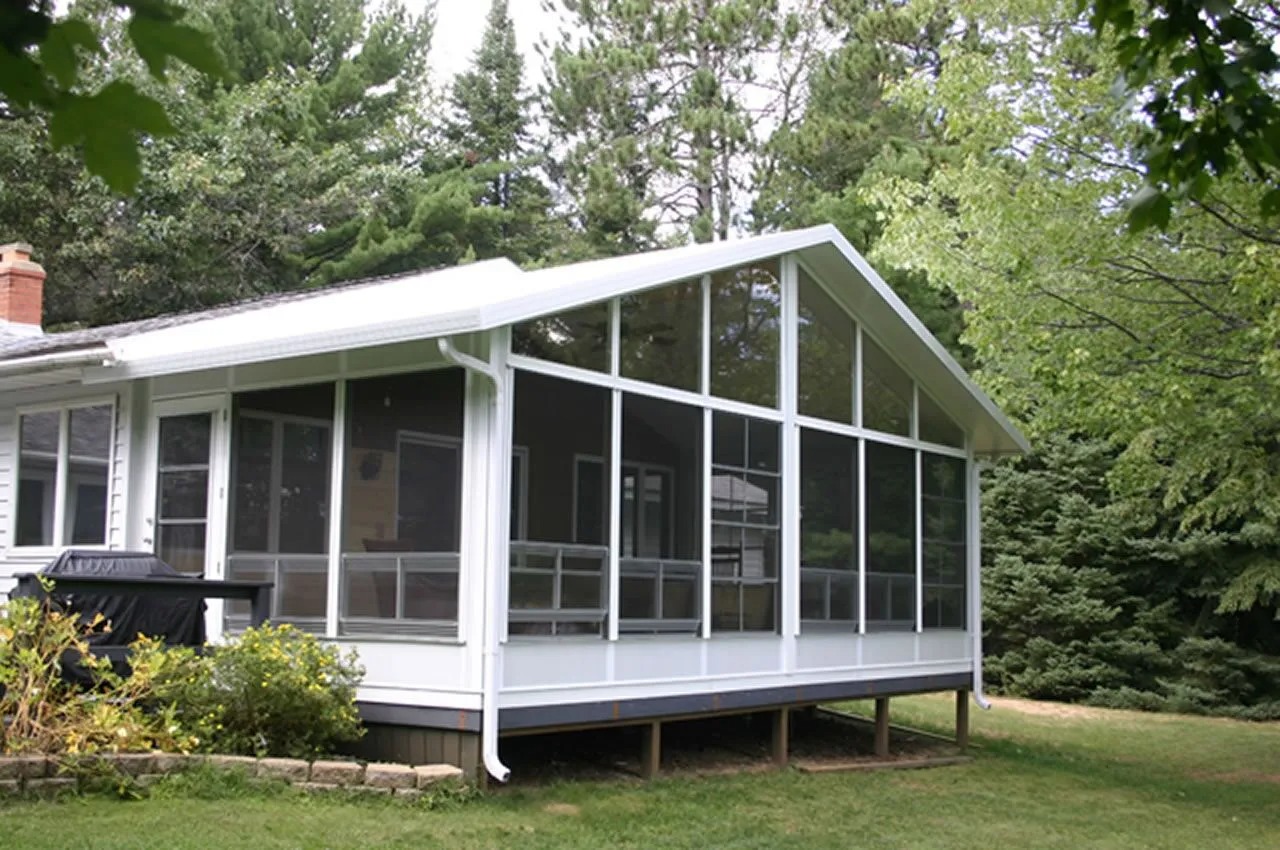
Choosing between a three-season and an all-season sunroom comes down to one thing: how stable you need the room to feel in real Connecticut weather. A three-season room is usually thermally isolated and unconditioned. In contrast, an all-season room is designed to be conditioned so it can be heated and cooled like a living space.
If you’d like a quick sanity check before you commit, a Sunroom Builder in Connecticut can review your layout, how you plan to use the room, and the comfort risks that show up after the first winter.
The Fast Answer
A three-season sunroom is typically built for comfort in spring, summer, and fall. Still, it’s usually thermally isolated and not intended to stay cozy through a Connecticut winter without extra heat.
An all-season sunroom is built with higher-performance materials and a plan to heat and cool the space, so it behaves more like the rest of the house.
The label matters less than the system. Glass, roof, insulation, air sealing, and HVAC planning decide whether the room feels great or feels drafty.
What “Three-Season” Usually Means
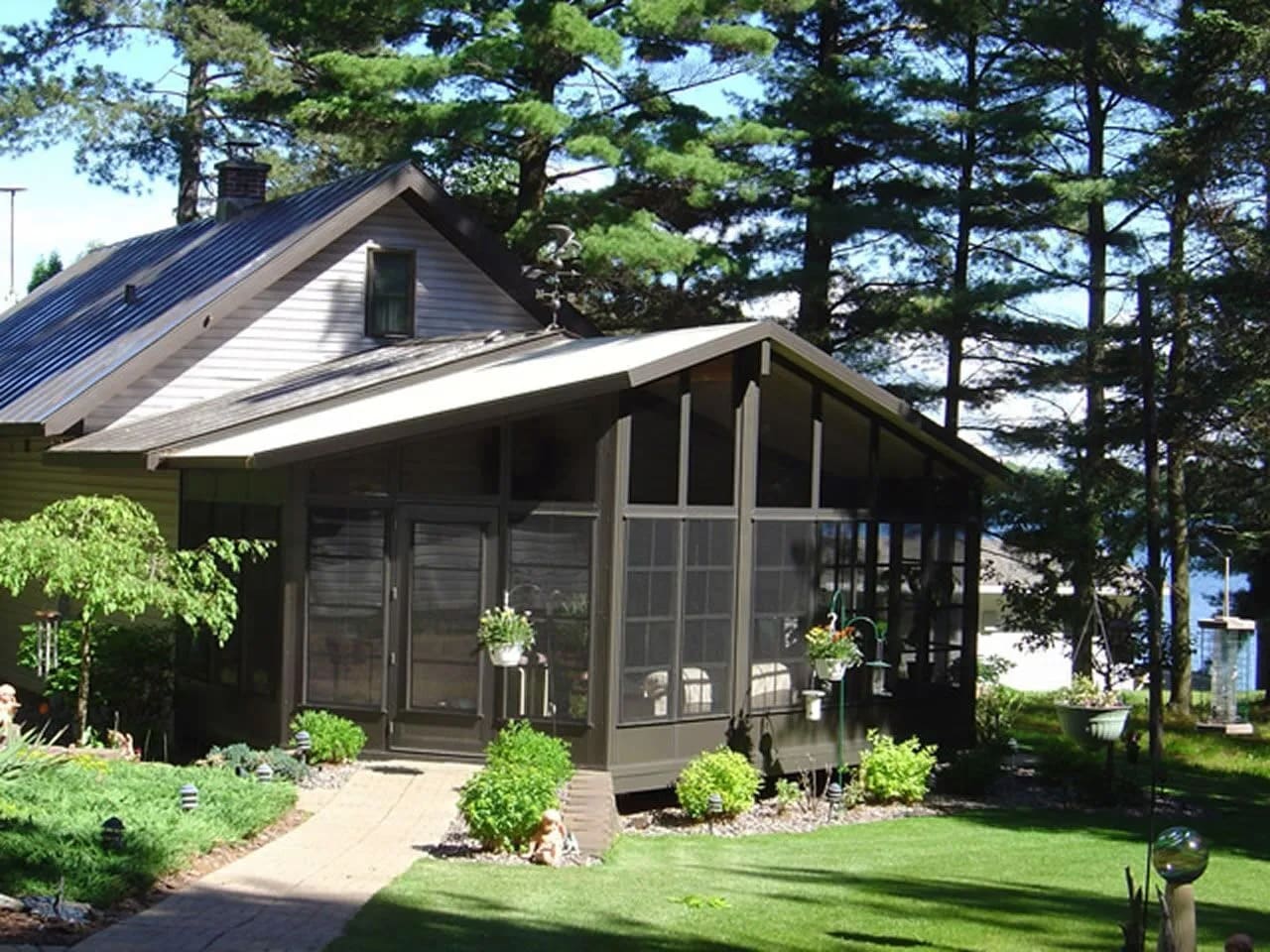
Most three-season rooms are lighter enclosures. They block bugs, wind, and rain, and they’re perfect for the months when outdoor temps are comfortable.
In practice, three-season rooms often include:
- Less insulation in walls and roof, sometimes none, because the room isn’t designed to be conditioned.
- Windows and doors are typically less efficient than true year-round room packages, so indoor temps swing more with outdoor temps.
- A separation from the home, often with an exterior style door between the home and the sunroom to limit heat loss from the main house.
If you like building definitions, many three-season rooms fall into thermally isolated, unconditioned categories such as Category I, II, or III.
What “All-Season” Really Means
“All-season” and “four-season” are often used interchangeably in the market. The meaningful difference is whether the room is designed to be conditioned and comfortable in both winter and summer.
All-season builds tend to change the parts that control heat flow and comfort:
- Better window systems commonly use double-pane insulated glass with low-E coatings and often argon gas fill.
- Low-E coatings are designed to reduce the passage of ultraviolet and infrared light through the glass while still allowing visible light, helping manage heat gain and heat loss.
- Argon gas-filled can improve insulation performance because it is denser than air, reducing heat transfer between panes.
- A real conditioning plan, either tied into the home system or controlled independently, which aligns with conditioned sunroom categories.
In the category language, an actual year-round room often matches Category V, meaning it’s conditioned and not thermally isolated from the home.
Three-Season vs All-Season (Quick Table)
Here’s the clearest side-by-side view.
| Feature | Three-Season Sunroom | All-Season Sunroom |
| Typical use | Spring to fall comfort. | Intended for year-round use with heating and cooling. |
| Conditioning plan | Usually unconditioned and thermally isolated. | Conditioned, often integrated with the home or independently controlled. |
| Glass package | Often lower efficiency than year-round rooms. | Commonly, insulated glass, low E, often argon-filled. |
| Temperature swings | Bigger swings as the weather changes. | More stable temps if designed and appropriately conditioned. |
| Best fit | Seasonal dining, lounging, plants, bug-free space. | Daily living space, office, family room, winter use. |
Connecticut Factors That Affect Your Choice
Connecticut is in the ENERGY STAR Northern climate zone, so window performance and heat retention matter more than they do in milder regions.
A few local decision points usually settle it:
- Winter use goals. If you want the room to be comfortable in January without constant portable heat, an all-season design is usually the better match.
- Shoulder season swings. Sunny afternoons can feel great, then temperatures drop fast after sunset, which is where three-season rooms often feel the shift most.
- Permits and inspections. A sunroom addition generally requires a building permit in Connecticut, and trade permits may be required for electrical or other work.
- Town-specific requirements. Some Connecticut towns publish minimum permit application requirements for sunroom additions, which can include forms and drawing requirements.
If energy use is on your mind, keep Energy Saving Sunroom Tips for Connecticut Homes in your planning notes, especially while choosing glazing, shading, and ventilation.
Can You Convert a Three-Season Sunroom Later?
Sometimes, yes. It depends on what was built in from the start, especially structure, roof design, and whether the window and wall assemblies can accept insulated upgrades.
If you’re considering “build seasonal now, upgrade later,” plan ahead:
- Confirm that the framing and roof details can accept insulation and interior finishes later.
- Choose window systems with upgrade paths when possible, since glass is a significant comfort lever.
- Think through heating and cooling early, because retrofits can add cost and limit options.
Cost, Comfort, And Resale Tradeoffs
A three-season room is often the faster path to more usable space for most of the year. It’s a good fit if you mainly want a bright hangout from spring through fall, and you’re fine treating winter as off-season.
An all-season room usually requires more planning and higher-performance materials. In return, it can feel closer to an actual living space, especially when it’s conditioned and built with higher-performance glazing and insulation.
If resale is part of your plan, quality and integration matter a lot, and Sunrooms Home Resale Value in Connecticut is a helpful angle to weigh alongside comfort and budget.
FAQ
Is a three-season sunroom heated?
Usually no. Many three-season rooms are unconditioned and thermally isolated, so they aren’t designed to run on the home’s heating and cooling like a living space.
Is “all-season” the same as “four-season”?
Often yes. What matters is whether the room is conditioned and whether it’s thermally isolated or integrated with the home’s thermal controls.
Do low-E windows matter in Connecticut?
Low-E coatings help manage heat flow by reducing ultraviolet and infrared transmission while allowing visible light to pass, which supports comfort in both winter and summer.
Why do some all-season sunrooms use argon in the windows?
Argon-filled double-pane units can insulate better because argon is denser than air, reducing heat transfer between panes.
Do I need a permit for a sunroom addition in Connecticut?
In many cases, yes. A building permit is generally required for sunroom additions, and towns may require specific application documents and drawings.
Talk With a Sunroom Specialist
If you’re stuck, decide based on your hardest month, not your nicest month. If you want dependable comfort year-round, plan for an all-season room with a straightforward HVAC approach and a strong window package.
Reach out to Sunroom Designs New England with your Connecticut town, a photo of the project area, and how you plan to use the space. We’ll help you pick the right build type and avoid comfort problems that are hard to fix later.