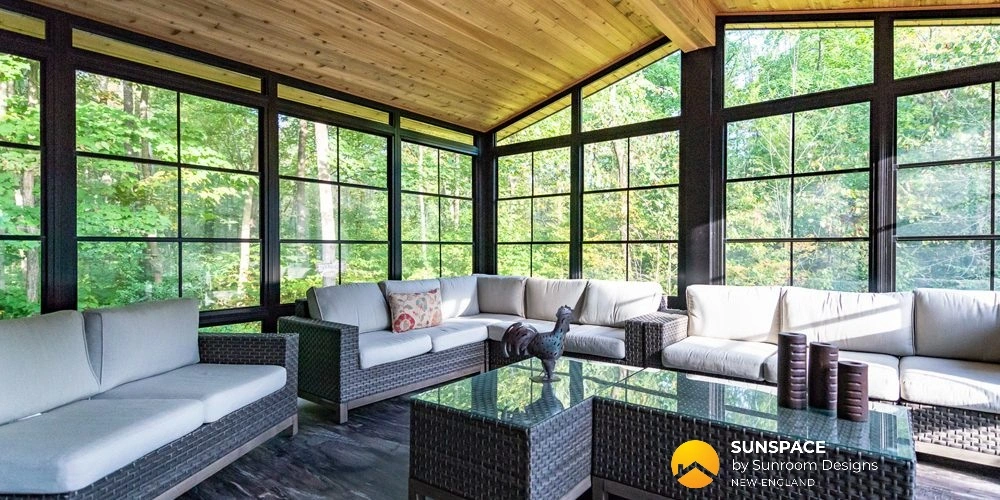
A 20×20 sunroom covers 400 square feet of living space. At that size, you’re looking at a real addition to your home, not a small enclosure bolted to the back of a porch. Most Connecticut homeowners budgeting for a project like this want a clear, honest...
Massachusetts winters are no joke. Temperatures routinely drop below freezing, nor’easters arrive without much warning, and a sunroom that isn’t built for the climate turns into an unusable icebox by November. If you’re asking whether you can...
Connecticut homeowners deal with nor’easters, heavy snow loads, summer humidity, coastal winds, and freeze-thaw cycles that repeat every single year. A sunroom that isn’t designed for these conditions will show problems fast, such as sticking doors, drafty...
Choosing between a three-season and an all-season sunroom comes down to one thing: how stable you need the room to feel in real Connecticut weather. A three-season room is usually thermally isolated and unconditioned. In contrast, an all-season room is designed to be...
New England winters can turn a beautiful sunroom into the coldest spot in the house. This guide covers the core features that make a sunroom feel warm, stay clear of condensation, and cost less to run. If you’re comparing regional build approaches, it can help...
Choosing the right sunroom or porch enclosure in New England is a major investment. With our region’s heavy snow, high humidity, and intense pollen seasons, a “one-size-fits-all” solution doesn’t work. Below, we compare Sunspace Sunrooms...